2.01.2014

Perilous Times: Heaping to Ourselves Teachers

Scriptures teach that Christ will return “in the beginning of the seventh thousand years”[1]—a time at which we have arrived. In March 2000, Elder Boyd K. Packer said the seventh millennium has begun[2] and, in conference held in my stake in March 2009, Elder John M. Madsen confirmed this as well.[3] In this same address, Elder Madsen further noted that he had been asked to “be positive” when talking to the saints. He then proceeded: “I am positive that all the destructions foretold in the scriptures will occur!”[4]

Likewise, I believe these are, and will be, difficult days. President Howard W. Hunter declared that “all dispensations have had their perilous times, but our day will include genuine peril”. President Monson more recently reminded us that “[w]e have come to the earth in troubled times. The moral compass of the masses has gradually shifted to an ‘almost anything goes’ position.”[5] We have also been warned that God’s judgments are soon to be poured out without measure.[6] In light of this, there is comedy in the fact that NO FEAR[7] is the slogan of the generation in which fear shall come upon every man.[8] Notwithstanding all we face, Sister Julie B. Beck reminded us that “the Lord is not apologizing that we live in troubled times.”[9] I testify that God is with us and will prevail.

Of the challenges we face today, one of the greater is the war in which we are presently engaged. Concerning this present conflict, Elder Packer said:
You too live in a time of war, the spiritual war that will never end . . . . Your world at war has lost its innocence. There is nothing, however crude or unworthy, that is not deemed acceptable for movies or plays or music or conversation. The world seems to be turned upside down.[10]
Although all are involved, not all are equally engaged—some are not even mindful that the war exists. This lack of awareness partly stems from the fact that we fight not against flesh and blood, but against the unseen rulers of darkness.[11] A more dreadful cause for ignorance of the conflict is that some may have embraced the world of darkness.

But living in this world does not mean we must accept it. Although raised in difficult circumstances, Abraham, for example, still sought for that city “whose builder and maker is God.”[12] And although the conduct of others prevented him from realizing his dream, Abraham’s quest yet yielded him precious fruit, for the personal journey he made within, while seeking for the city above, resulted in him becoming that for which he sought; in seeking for Zion, he became Zion—the pure in heart.

Zion, we have been taught, is soon to be established and, with it, peace. But this does not mean there won’t be casualties in the unseating of Satan. It is, therefore, good to be reminded that he was denied a body and desired all to become likewise miserable.[13] Having failed, he sought to take possession of the bodies of those still qualified to receive them. Although this plan similarly failed, he continued a strategy to take custody of our bodies—if not by force, then with our consent.

When Israel rebelled, the Lord warned that He would bring the worst of the heathen against them to possess their houses, and defile their holy places.[14] Although Babylon afterwards engaged in this campaign against Israel, the truest application of Ezekiel’s prophecy is for us—for the apostle Paul warned that, before the Lord’s Coming, Satan would “sit in the temple of God, showing himself that he is God.”[15] Notably, the temple referred to is our bodies—the only house that Satan desires to possess and defile.[16] This is confirmed in modern revelation[17] wherein it is also announced that Babylon is the final approach Satan devised to possess our bodies. The suggestion that he has already entered them was recently made when Elder Packer declared that “largely because of television, instead of looking over into that spacious building, we are, in effect, living inside of it.”[18]


Babylon is no longer an empire with borders and an earthly king. It now embraces all nations[19] and is ruled over by Satan himself. It is a woman arrayed in costly apparel[20] with a cup in her hand;[21] and as all nations have drunk of her wine, they have ventured into her captivity. She is the whore of all the earth and association with her is what the scriptures call whoredoms. She is also the tares[22] of the earth[23] and, therefore, stages a distinctive threat to wheat[24]—a threat heretofore[25] identified as “flattery of prominent men in the world, false educational ideas, and sexual impurity.”[26] Consistent with the last of these perils, she enjoys dark rooms, vacant lots, black-light parties, loud music, and crude language. She likewise indulges in recreational romance, Levi®-loving, dirty dancing, unnatural affection, and views pornography of any degree so long as its effect is to arouse. Of lesser severity, but with equal defiance, she puts on tight jeans, displays cleavage, wears dresses above the knee, and indefensibly sports dark leggings to cloak the tininess of her dress. She enjoys idleness and something akin to it called video games that produce no growth of either mind or body. She’s for herself[27] and, thus, spends careless hours with I phones®, I Pads®, IPods®, ITunes®, and I Facebook®!

Though this inventory is meant to highlight faults with which some of this generation struggles, I want to add a point of which all should take careful note—that in her is found the blood of prophets.[28] For good reason did Alma write:

And now I ask of you, my brethren, how will any of you feel, if ye shall stand before the bar of God, having your garments stained with blood and all manner of filthiness? Behold, what will these things testify against you?

Behold, will they not testify that ye are murderers, yea, and also that ye are guilty of all manner of wickedness?[29]
This singular caution should keep all who call themselves saints fully disinterested in her merchandise and responsive to the cry to come out of her.[30]

Therefore, the first invitation I extend is to carefully examine your association with Babylon; ask yourself if you are keeping your temple holy, unsoiled of her blood, abstinent of her wine, and stripped of her apparel. Can there be any question that keeping laws of chastity extends to not being joined to her? If your life touches hers in the least, repent and cast her aside.[31] 

In light of this invitation, I would like to next examine two commandments: 1) Go ye out from Babylon, and 2) Be ye clean that bear the vessels of the Lord.”[32] I begin by making several relevant observations:
First, one cannot go out from a place in which he or she does not exist;  
Second, vessels are descriptive of instruments used in temple worship,[33] but can also be expressive of the true temple, God’s children;[34] and 
Third, just as vessels can be characterized in two ways, the word bear can also have two meanings; with respect to vessels that were temple instruments, it was the duty of appointed Levites to bear such vessels.[35] With respect to vessels that are God’s children, it is the sacred duty of women to bear such vessels.[36]
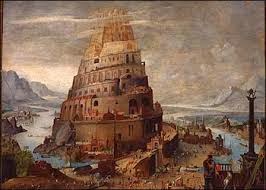
Continuing, according to D&C 133:4, 16, these two commandments are given to the church, the Lord’s bride, which fact takes on significance in determining the meaning to give to the words bear and vessels. When dwelling on “going out from Babylon,” it is easy to envision Israel coming out of Egypt. However, this ancient image melts away in light of Elder Packer’s recent assertion that although Sodom and Gomorrah was localized, they are “[n]ow . . . spread across the world, and they are among us.”[37] Hence, there is no place that we can truly go where Babylon is not. Thus, our departure from Babylon is a spiritual journey as afterwards confirmed by the Lord where He warns the church to go ye out “from the midst of wickedness, which is spiritual Babylon.”[38] But coming out of Babylon does not place us at our final destination; rather, it is only provisional—designed to set our feet on a path leading from that great and spacious building. Hence, follow this interesting verse from Micah:
Be in pain, and labour to bring forth, O daughter of Zion, like a woman in travail: for now shalt thou go forth out of the city, and thou shalt dwell in the field, and thou shalt go even to Babylon; there shalt thou be delivered; there the LORD shall redeem thee from the hand of thine enemies.[39]
Notwithstanding the command to go out from Babylon, the Lord has also said that we will go to Babylon and there be delivered from our enemies. How do we resolve this superficial contradiction? If not attentive, we may fail to observe that our most important delivery is not out of Babylon, but into Christ’s family. Such is the delivery referred to by Micah. But before I address that matter, let me first note what common sense dictates and celestial law orders—that where family exists, it must begin with a marriage.[40]

Although not frequently addressed, each of us is a member of a spiritual family with Christ as our Husband[41] and us as His bride[42]--more commonly known as His church.[43] One of the more beautiful accounts of this marriage was penned by Ezekiel:
Now when I passed by thee, and looked upon thee, behold, thy time was the time of love; and I spread my skirt over thee, and covered thy nakedness: yea, I sware unto thee, and entered into a covenant with thee, saith the Lord GOD, and thou becamest mine.[44]
But marriage—including ours to the Lord—was not designed to be an end in itself, for with it comes the commandment to be fruitful and multiply.[45] Thus, just as an earthly bride delivers her child, all who comprise the bride of the Lord are likewise given power, through the atonement of Jesus Christ, to deliver a child upon whom all enemies, both death and hell,[46] have no claim. This child is the same for all who are delivered—it is ZION, the pure in heart. While the church and Zion can be viewed as institutions, our marriage to Christ and becoming Zion are individual pursuits. Thus, it is most helpful to stop thinking of the church—the Lord’s bride—and Zion—the bride’s offspring—as institutions, and begin viewing them as a spiritual development within oneself. Jeremiah articulated this spiritual development as we become one with the Lord, and granted His heart:

Turn, O backsliding children, saith the Lord; for I am married unto you; and I will take you one of a city, and two of a family, and I will bring you to Zion . .

Thou shalt call me, My father; and shalt not turn away from me. [47]
Simply expressed, each of us, as the Lord’s bride, conceives when the word of God is received into our heart and is quickened by that Spirit which gives life to all things.[48] As this seed develops and is nurtured[49] by faith, diligence, and patience, a child pure in heart is delivered.[50] Each of us must individually experience this, for I know of no other delivery that looses the bands of wickedness, that breaks every yoke of sin, that proclaims liberty to the captives,[51] and lets the oppressed go free.[52]


If this process sounds familiar to you, it’s because Alma’s discourse of how a seed is planted, germinates, and grows up into a tree is an effective metaphor of how human life is conceived and develops into a child possessing the name,[53] countenance,[54] and attributes of its father[55]—for Alma’s grand conclusion of his experiment is this—that EVERY SEED BRINGETH FORTH UNTO ITS OWN LIKENESS.[56] Based on this adage, Elder Jeffrey R. Holland condensed Alma’s entire discourse into one brief, but extraordinary sentence showing the link between the word of God and Jesus Christ: “Here the seed—the word of God—is moving toward full stature as the Word of God.”[57]

Unfortunately, not all deliveries enjoy this happy ending. Isaiah[58] wrote of a time when the bride delivered a child that died in its formative years. Barely two hundred years passed away after the Lord’s visit to America before the church, or bride, in 4th Nephi forgot her sucking child and had not compassion on the son of her womb.[59] Rather, she “did trust in her own beauty and played the harlot.”[60] Although we see this apostasy as an institutional event, it wasn’t—it was an individual episode—one person at a time. Thus, as she spent her days in selfish pursuits, seeds sown during the intervening years fell on stony places, others were cast by the wayside, and some grew among thorns;[61] and the child—once promised eternal life[62]—died a shameful death.

For this child neglect and other atrocities,[63] the Husband gave His wife “dry breasts and a miscarrying womb”[64] and forsook her for “a small moment”.[65] But as He turned away His face,[66] His voice could yet be heard—“I [will] not forget thee . . . Behold, I have graven thee upon the palms of my hands.”[67] Such love—such forgiveness—has been known only once.


Foretelling the re-union between Christ and His bride in the latter days, Isaiah recorded:
Thou shalt no more be termed Forsaken . . . but thou shall be called Delightful. For as a young man marrieth a virgin, so shall thy God marry thee; and as the bridegroom rejoiceth over the bride, so shall thy God rejoice over thee.[68]
In keeping with His parting promise, the appearance of the Lord to Joseph Smith was to renew the marriage covenant and fulfill His promise to write His law in our heart[69] that we may know Him[70] . . . which brings us to today!

Just as the temporal family is Satan’s visible target, the spiritual family is his hidden agenda, and knowing that he hath but a short time,[71] he sits determined to foil each family’s essential purpose to bring forth a child pure in heart.[72] In his pursuit, is there any question that he gives substantial effort to destroying the word of God—the seed planted in the heart of the bride that commences life? It is therefore, that I focus a few remarks on the part the word plays in each of our spiritual families.

As noted previously, the command to “be ye clean” is given to each of us, the Lord’s bride. By what manner are we to be cleansed? After describing the Lord’s marriage to His bride, Ezekiel described how the Lord then washed His bride with water that she would be clean.[73] In this same context, the apostle Paul wrote:
Husbands, love your wives, even as Christ also loved the church, and gave himself for it;

That he might sanctify and cleanse it with the washing of water by the word,

That he might present it to himself a glorious church, not having spot, or wrinkle, or any such thing; but that it should be holy and without blemish.[74]
Obedience to God’s word is the only means by which fallen creatures are transformed through the atonement of Jesus Christ into celestial beings. Thus, Christ prayed that we would be sanctified through the word.[75] Explaining this, Elder Bruce R. McConkie taught:
Sanctification comes only to the obedient; it is the truth of heaven—the very word of God . . . which sanctifies the souls of men. As . . . Jesus sanctified himself by obedience to the words of the Father, so the Twelve [and we] may sanctify themselves through the truth Jesus has given them.[76]
To the prophet Joseph Smith, the Lord declared that they who are not sanctified through the law of Christ cannot inherit the celestial kingdom.[77] The law of Christ—also named the law of the gospel—comprises all that has been given as scripture.[78] Because it embraces the power of an endless life,[79] it is that pearl of great price for which we must be willing to sell all that we have to possess.[80] Owing to its worth, the Lord denounced the church, or bride, for having treated it lightly,[81] which vanity,[82] he continued, “brought the whole church under condemnation.”[83] We have likewise been warned to “beware how [we] hold [these words], for they are to be answered upon [our] souls in the day of judgment.”[84]

It is this law comprising all that God has spoken—these living waters—with which we are to be washed.[85] Importantly, these waters have also been given “for a law, to be my law to govern my church,”[86] declared the Lord. Remembering that the church is the bride is vital with respect to the Lord’s use of the term govern in this verse, for the Lord later affirmed that “that which is governed by law is also preserved by law and perfected and sanctified by the same.”[87] Thus, being washed by the word requires that we not only know that which is written, but that we also be governed by that which is written.”[88] President Harold B. Lee confirmed:
You may ask me, how does one sanctify himself, and make himself holy so that he is prepared to walk in the presence of the Lord? . . . The Lord says this, ‘And again, verily I say unto you, that which is governed by law is also preserved by law and perfected and sanctified by the same’ (D&C 88:34). What law? The laws of the Lord as contained in the gospel of Jesus Christ, the keeping of which laws and ordinances are the ways by which we are purified and made holy.[89]
The link between being governed and washed by the word of God is most beautifully illustrated in Ezekiel 47, wherein, Ezekiel is taken to the house from whence the pure and living waters flow. He is brought through the waters that issue from the house—not once, but four times. With each passing through, the waters grew progressively deeper—to the ankles, the knees, and the loins, thus, symbolizing an increased submission to the water’s flow and a greater cleansing. When at last, the “waters were risen” and became “waters to swim in, [and] a river that could not be passed over,”[90] I sense that Ezekiel had become altogether governed by the water insomuch that he was taken whithersoever the waters flowed. And through that governance by the pure waters which issued from the sanctuary, he was preserved, perfected, and sanctified by the same.
Since becoming pure in heart occurs individually and within, vast opportunity exists for each of us to become pretenders. Hence, the degree to which we treat with solemnity the word, and are washed by knowing and obeying it is entirely of our private choosing. But it is also within God’s power to decide who will and who will not be given His word:
For behold, thus saith the Lord God: I will give unto the children of men line upon line, precept upon precept, here a little and there a little; and blessed are those who hearken unto my precepts, and lend an ear unto my counsel, for they shall learn wisdom; for unto him that receiveth I will give more; and from them that shall say, We have enough, from them shall be taken away even that which they have.[91]
Based on the foregoing, my second invitation extended to you is two-fold. First, God has entrusted to you the power of an endless life. Prove to Him that He has not cast this pearl before swine[92] by treasuring up in your mind every day these words of eternal life. Make your study consistent and sufficient. Second, give diligent heed to the words of eternal life. Live by them and love them that they may be written in your hearts—that the law which governs you may also preserve, perfect, and sanctify you.

Simply because the waters are pure when they issue from the throne of God does not mean they must remain so. In his pursuit to destroy the spiritual family, is there any question that Satan gives attention to muddying the waters; that with intent to mislead, he pollutes the pure wine of the gospel with the philosophies of men.[93] It is on this very point that the apostle Paul penned the words: “THIS know also, that in the last days perilous times shall come.”[94] Asserting that we live in those times, Elder Packer recently noted that the dangers itemized by Paul are a description “of the days in which we live.”[95] In this same context, Paul warned Timothy in his next letter of the disregard that latter-day saints would show towards the word of God:
For the time will come when they will not endure sound doctrine; but after their own lusts shall they heap to themselves teachers, having itching ears;

And they shall turn away their ears from the truth, and shall be turned unto fables.[96]
Although some attribute these warnings to those of an earlier dispensation, they most assuredly pertain to us, for Paul’s final warning that “we would not endure sound doctrine” hints of another event that occurred to ancient Israel of which Paul said was recorded “for an admonition for those upon whom the end of the world shall come.”[97]

Concerning this other event, when the children of Israel left Egypt, they did so in haste. One month following their departure, the assembly cried out in hunger. To Moses, the Lord responded: “Behold, I will rain bread from heaven for you; and the people shall go out and gather a certain rate every day, that I may prove them.”[98] Although nutritional, it tasted like fresh oil.[99] Thus, on several occasions, the congregation scorned this light bread.[100] During one incident, some cried: Why came we forth out of Egypt?[101] In response, the Lord “brought quails from the sea, and let them fall by the camp.” Eager for flesh, the congregation heaped to themselves quail, such that he that gathered least gathered 65 bushels.[102] 

Just as ancient Israel did not endure the light bread but heaped to themselves flesh, Paul declared that saints of the last day likewise would not endure sound doctrine but instead would heap to themselves teachers—Darwin, Dewey, Huxley, Rogers, Freud, Keynes, Marx, and Hegel to name only a few on the heap. Because of them, Nephi wrote, all have “gone astray save it be a few, who are the humble followers of Christ; nevertheless, they are led, that in many instances they do err because they are taught by the precepts of men.”[103] Even the humble followers of Jesus Christ do err because they are taught by the precepts of men. Great caution, then, must be exercised with respect to the precepts of men—even if taught at a church institution.[104] Nephi therefore provides the litmus test by which all can measure the truthfulness of that which is spoken: “Cursed is he,” Nephi wrote, “that putteth his trust in man, or maketh flesh his arm, or shall hearken unto the precepts of men, save their precepts shall be given by the power of the Holy Ghost.”[105]

Thus, my third and final invitation extended to you is also two-fold. First, go often to that place from where the pure waters flow—the temples of the Lord—that you may learn to swim in clean waters—unsullied by the philosophies of men—and, thereby, be cleansed with the washing of water by the pure word of God, that the Lord might present you to himself, a glorious church, not having spot or wrinkle, or any such thing; but that you should be holy and without blemish. Second, after you have left that sacred house, apply the litmus test that Nephi gives to test all that is spoken in the world and reject as fables the precepts of men save those which have been given by the power of the Holy Ghost. By so doing, the pure waters are continuously filtered that they may remain pure.

I bear testimony of Jesus Christ, that he is coming and shall cleanse this earth with the brightness of his coming. I seek for that day. All who are pure—even as He is pure—shall abide the day; whether in life or in death.[106] “Worthy is the Lamb that was slain to receive power, and riches, and wisdom, and strength, and honour, and glory, and blessing.”[107] May we have sense enough to experience all that He offers to us through His atonement and His endless and powerful word. In the name of Jesus Christ, Amen.


FOOTNOTES
[1] See D&C 77:12-13.
[2] Packer, Boyd K., And They Knew It Not, CES Fireside for Young Adults, 5 March 2000, p. 6.
[3] As recorded in the Saturday evening session of BYU-Idaho 5th Stake Conference held on March 14, 2009 in the Hinckley Chapel at BYU-Idaho. Therein, Elder Madsen quoted President James E. Faust as saying: “The chronological millennium has begun. The spiritual millennium will begin with the coming of Christ.”
[4] The Lord has laid his hands upon the nations and has declared that the wicked shall be scourged until all that remain shall know him (see D&C 84:96-98). 
[5] See Hunter, Howard W., An Anchor to the Souls of Men, Ensign, October 1993, pp. 70-72 and Monson, Thomas S., Priesthood Power, Ensign, May 2011, p. 66.
[6] See D&C 101:11; compare D&C 109:45.
[7] Jeremiah summarized these days as the day of Jacob’s trouble; a day wherein he describes men with hands on their loins resembling women in labor (see Jeremiah 30:4-7). Similarly, Daniel prophesied of these days as “a time of trouble, such as never was since there was a nation” (see Daniel 12:1). Confirming that the day of Jacob’s trouble has arrived, the following warning was given to this nation shortly following the martyrdom of the prophet Joseph: “And now cometh the day of their calamity, even the days of sorrow, like a woman that is taken in travail; and their sorrow shall be great unless they speedily repent” (see D&C 136:35).
[8] See D&C 63:33; compare D&C 88:91.
[9] As recalled and paraphrased from a Q&A session incorporated as part of a regional meeting held for the Relief Society at the BYU-I Center on February 12, 2011.
[10] Packer, Boyd K., Lehi’s Dream and You, CES Devotional Address, Brigham Young University, 6 January 2007.
[12] See Hebrews 11:10; compare D&C 45:12.
[13] See 2 Nephi 2:18.
[14] Ezekiel 7:24; emphasis added.
[17] See D&C 86:3; compare Revelation 13:6.
[18] Packer, Boyd K., Lehi’s Dream and You, CES Devotional Address, Brigham Young University, 6 January 2007.
[19] See D&C 86:3; compare D&C 84:82 with Matthew 6:28-39; and D&C 133:7, 14. It stems from the river unto the ends of the earth (see Psalms 72:8; compare 1 Kings 4:21). The “river” is a reference to the Euphrates, the great river that flowed from the Garden before the lands were divided.
[20] But her costly apparel (see Revelation 18:19; compare Mormon 8:36-39) is also a treacherous disguise, replicating what was worn by the temple priests in ancient Israel (See Exodus 26-30; compare Leviticus 8. She, like the scarlet beast upon whom she sits, is apostate (see Revelation 17:3).
[21] Compare 1 Corinthians 10:18-22.
[22] President Brigham Young said: “It is among those who are the bride, the Lamb's wife, that the foolish are to be found. But he never has instructed us to call on the ungodly, and those who would mob us, to make foolish virgins…Let me tell you, the tares will be in the field, and many will think they are wheat, until harvest comes; but at no time has the Lord said, bring the wicked and ungodly among my people to scourge them; for they are capable of bringing upon themselves all the evil necessary to perfect the good” (see Young, Brigham, Journal of Discourses, 12:231-232).
[23] See D&C 88:94.
[24] See D&C 86:7.
[25] See Benson, Ezra Taft, Conference Report, October 1964, p. 56.
[26] Lee, Harold B., Conference Report, April 1948, p. 312.
[27] See 3 Nephi 1:29-30.
[28] And of all who are slain upon the earth (see Revelation 18:24).
[30] See D&C 133:5, 14; compare Revelation 18:4. See the apostle Paul’s discussion on this very point in 1 Corinthians 6:15-20; compare Hosea 2.
[31] See Isaiah 30:22.
[32] See D&C 133:5.
[34] Such as used in Alma 7:10 when referring to Mary as a chosen vessel of the Lord.
[35] Such duties are fully outlined in Numbers 4 and 7; compare with Isaiah 22:20-25.
[36] See 1 Nephi 17:1; compare “The Family: A Proclamation to the World,” Ensign, November 1995, 102.
[37] Packer, Boyd K., The One Pure Defense, Address to CES Religious Educators, 6 February 2004, Salt Lake Tabernacle, p. 4.
[38] See Hebrews 10:14; compare D&C 133:14.
[39] Micah 4:10.
[40] See D&C 131:1-4.
[41] See Isaiah 54:5; compare Jeremiah 31:32.
[42] See Isaiah 54:5 (footnote 5a), Ezekiel 16:8, Hosea 2:19 (footnote 19a), Ephesians 5, and JST Revelation 12, respectively.
[43] The covenant joining Christ with His bride is termed the Abrahamic Covenant, although this is not commonly understood.
[45] See Genesis 1:27.
[46] See 2 Nephi 9:10.
[48] See D&C 33:16; compare D&C 11:21, D&C 88:13, and John 6:63.
[49] In other words, by adding to it virtue, knowledge, temperance, patience, godliness, brotherly kindness, charity, humility, and diligence (see D&C 4:6; compare 2 Peter 1:5-8 and D&C 107:30-31).
[50] See D&C 97:21.
[51] Compare Isaiah 61:1-3.
[52] The apostle John likewise saw this transformation of the Church of God into the kingdom of our God and his Christ which, according to D&C 105:32, is ZION—the pure in heart (see D&C 97:21). Although what John sees is the institution of Zion coming forth from the Church of God, the bringing forth a child pure in heart (see Alma 5:13-14, 19) must occur individually before Zion can be institutionally organized. Hence, while some wait for Zion to be broadcast, the Lord has declared that “he shall send his angels before him with the great sound of a trumpet—a trump that some will not hear—and they shall gather together the remainder of his elect” (JS—Matthew 1:37)—to bring as many as will come to the church of the Firstborn (see D&C 77:11).
[53] See D&C 109:26.
[54] The countenance of the Lord is clean hands and a pure heart (see D&C 64:24, Psalms 24:4-6, and especially Alma 5:14, 19).
[55] See Alma 5:13-14, 19; compare Mosiah 5:7.
[56] See Alma 32:31.
[57] Holland, Jeffrey R., Christ and the New Covenant: The Messianic Message of the Book of Mormon, p.168; emphasis added. 
[58] See 1 Nephi 21:20; compare 4 Nephi 1:22-46. Zenos likewise wrote of this event (see Jacob 5:41-42).
[59] See 1 Nephi 21:15.
[61] See Matthew 13:1-9.
[62] See 4 Nephi 1:3, 17.
[63] See 1 Nephi 11:32-35; compare Amos 8:4-13.
[64] See Hosea 9:14. The death of the Nephite nation is foretold by Hosea in this chapter.
[65] See Isaiah 54:7.
[66] See Jacob 5:41.

[68] JST Isaiah 62:5; "For as a young man marrieth a virgin, so shall thy God marry thee; and as the bridegroom rejoiceth over the bride, so shall thy God rejoice over thee." [69] See 2 Corinthians 3:2-3; compare Hebrews 8:9-12. It is rarely understood that the promise made by the Lord in the sacrament prayers—that they may always have his Spirit of be with them (see D&C 20:77; compare verse 79)—is in fulfillment of that part of the new and everlasting covenant, wherein, the Lord declared that “I will put my law in their inward parts, and write it in their hearts” (see Jeremiah 31:33). 

[70] Jeremiah 31:33-34. According to the prophet Joseph Smith, the calling and election made sure (or Holy Spirit of promise) will be the manner by which every man shall know the Lord (see Smith, Joseph, Teachings of the Prophet Joseph Smith, p.149).
[73] See Ezekiel 16:9.
[75] See John 17:17-19.
[76] McConkie, Bruce R. The Mortal Messiah: From Bethlehem to Calvary, 4 vols., 4:, p.114; emphasis added. 
[77] D&C 88:21. The woman, church, bride, or “body of Christ” must be washed and sanctified by the word unto becoming pure in heart, or unto being delivered through great travail as the holy child—Zion. According to D&C 43:8-9, we are to meet together to instruct and edify . . . and thus, be sanctified by that which we have received. 
[78] See D&C 42:59; compare D&C 84:44.
[79] See JST John 1:18.
[80] See JST Matthew 13:47; "And again, the kingdom of heaven is like unto a merchant-man, seeking goodly pearls, who, when he had found one pearl of great price, he went and sold all that he had and bought it."
[81] D&C 84:54.
[82] It is quite remarkable how these verses harmonize with those penned by Isaiah, wherein, he described the bride pretending to be with child, but when she came to the birth, only wind, or vanity, came forth. Follow along as I read some of the most disparaging verses ever written:
Like as a woman with child, that draweth near the time of her delivery, is in pain, and crieth out in her pangs; so have we been in thy sight, O Lord.We have been with child, we have been in pain, we have as it were brought forth wind; we have not wrought any deliverance in the earth; neither have the inhabitants of the world fallen (Isaiah 26:17-18).
The bride “treated lightly the things she had received” and rather than bring forth a child pure in heart, what she brought forth was the cares of this world.
[83] See D&C 84:55. It is well to be reminded that the church is the bride that is to nourish the child.
[84] D&C 41:12. These words are given to the salvation of [the Lord’s] own elect” (see D&C 35:20), they who treasure up His word (see JS—Matthew 1:37) hear his word, (see D&C 29:7) and hearken to His word (see D&C 33:6).
[85] See D&C 88:77-78.
[86] See D&C 42:59.
[87] D&C 88:34.
[88] See D&C 84:57.
[89] Teachings Of Presidents Of The Church: Harold B. Lee, p.27.
[90] See Ezekiel 47:1-5.
[92] See 3 Nephi 14:6.
[93] See McConkie, Bruce R., The Millennial Messiah: The Second Coming of the Son of Man, p.59.
[95] Packer, Boyd K., The One Pure Defense, Address to CES Religious Educators, 6 February 2004, Salt Lake Tabernacle, p. 4-5.
[100] Numbers 21:5.
[104] President Ezra Taft Benson taught: “We encourage you to get your . . . degrees and to further your education; but let us not forget that disaffection from the gospel and the Lord's church was brought about in the past by the attempts to reconcile the pure gospel with the secular philosophies of men . . . Be careful of blending your worldly training with the gospel courses you teach lest you be guilty of diluting the pure gospel of Jesus Christ and end up teaching the philosophy of men mingled with a few scriptures” (Benson, Ezra Taft, “The Gospel Teacher and His Message”, Latter-day Tracts, 8).
[106] D&C 35:20-21.

1.22.2014

Out of the Wilderness, Part I

It is often accepted that events described in Revelation by the Apostle John are shrouded in imagery difficult to understand. For that very reason, his writings often attract authors eager to solve the scriptural puzzle, including tabloid journalists whose sole motivation may be to sensationalize and instill fear in the readers of the apocalyptic literature. Even faithful members of The Church of Jesus Christ of Latter-day Saints may find that they spend hours deliberating the theatrical components of John’s revelation and, in so doing, fail to appreciate the simple facets of his vision. Indeed, who would choose to contemplate the significance of an angel flying in the midst of heaven having the everlasting gospel in his hand (see Revelation 14:6) when a tabloid article entitled the “The Beast and his Reign of Terror” bids our attention. But—to restate a cliché, all that is gold doesn’t glitter.

If we will take time to look beyond the invented drama swirling all about John’s writings, we will discover that Revelation 12 may not glitter but is, nevertheless, one of the great treasures of the New Testament. The prophet Joseph Smith thought so much of its scriptural importance as to restate the chapter in its entirety. He altered most of the verses, rearranged their order (see JST, Revelation 12), and most importantly added verse 7 that sheds important light on the entire chapter. Given its content, maybe it’s time to look again at this remarkable chapter. However, as with any revelation, when its layers are peeled back, it will be discovered that the deeper layers are much more rich and flavorful. The reader of this blog should understand that I intend to only scratched the surface of this revelation and provide a very limited perspective of a shadow. Parallels of the following will be seen through history.

The Great Adultery

A Darkened Day
Shortly following Christ’s mortal ministry, prophesies concerning a widespread rejection of the gospel and its ordinances were fulfilled. Israel’s rejection of the very stone upon which they were to build their foundation resulted in the Lord swearing: “I will never forget any of their works. Shall not the land tremble for this, and every one mourn that dwelleth therein? and it shall rise up wholly as a flood; and it shall be cast out and drowned, as by the flood of Egypt.[1] And it shall come to pass in that day, saith the Lord God, that I will cause the sun to go down at noon and I will darken the earth in the clear day[2] . . . and I will make it as the mourning of an only son,[3] and the end thereof as a bitter day.”

The consequence of the Only Begotten being wounded in the house of His friends was aptly described by Amos as “a famine . . . of hearing the words of the LORD” (see Amos 8:7-12)! Isaiah’s description of this event is also instructive and strikingly similar to that of Amos’ (see Isaiah 29:9-10). However, it is from the Book of Mormon that we read with great plainness about the apostasy: “in the last days . . . behold all the nations of the Gentiles and also the Jews . . . upon all the lands of the earth . . . will be drunken with iniquity and all manner of abominations . . . for ye shall cry out and . . . ye shall be drunken but not with wine, ye shall stagger but not with strong drink. For . . . the Lord hath poured out upon you the spirit of deep sleep. For behold, ye have closed your eyes, and ye have rejected the prophets; and your rulers, and the seers hath he covered because of your iniquity” (2 Nephi 27:1, 4-5). Although these verses note that the Lord brought this spiritual blindness upon Israel, Jacob declared that God would take his plainness away from them and deliver to them many things which they cannot understand “because they desire it” (see Jacob 4:14).

The approaching reality of this spiritual famine was noted by Paul in his letter to the saints at Thessalonia who were anxiously awaiting Jesus’ return foretold by Paul’s contemporaries (see Acts 1:11): “Now we beseech you,” he declared, “by the coming of our Lord Jesus Christ . . . . That ye be not soon shaken . . . as that the day of Christ is at hand. For that day shall not come, except there come a falling away first” (2 Thessalonians 2:1-3). That the great apostasy had already commenced at the time of Paul’s writing is demonstrated by his words found several verses later: “For the mystery of iniquity doth already work . . . . And then shall that Wicked [one] be revealed, whom the Lord shall consume with the spirit of his mouth, and shall destroy with the brightness of his coming” (2 Thessalonians 2:7-8; compare 1 John 4:3). Paul’s letters to the congregations at Corinth and Galatia further confirm that iniquity had crept into the church in only a generation and that the ordinances had become corrupted.[4] By the time the ancient apostles were slain, excepting John, the apostasy had grown to such dimensions that only seven of the Churches (see Revelation 1:4) were deemed worthy of John’s apostolic communication called Revelation. 

Continuing with a manifold and much deeper explanation of Israel's apostasy, it is within Chapter 12 of this communication that John introduces a woman, heavy with child, clothed with the sun and the moon under her feet, and a crown of twelve stars on her head. Importantly, although John’s vision pertains to things which he saw in heaven, such things were “in the likeness of things on the earth” (see JST Revelation 1:1). Thus, although verses 1 through 11 of this vision describes events that transpired in connection with the war fought in heaven, these events are also “in the likeness of things on the earth” and, therefore, describe much of which transpired during the dark ages and every age of apostasy on earth. JST Revelation 12:7 identifies this woman as a representation of the Church of God and a precise reading of this same verse confirms that the child she brought forth was the “kingdom of our God and his Christ" or Zion (see D&C 105:32).[5] Such is the eternal and divinely-appointed role of this woman . . . to bring forth a child that is pure in heart (see D&C 97:21). 

Following these supernal events, John's revelation took a quick turn for the worse, and he wrote that saw "a great red dragon, having seven heads and ten horns, and seven crowns upon his heads," seek to devour the child after it was born" (JST Revelation 12:5; compare D&C 76:25-29). Similar to nearly every Zion before or since, the blessed child was caught up to God and His throne.[6] Alone and depleted of those who were pure in heart, the woman fled into the wilderness, where she had a place prepared of God. There, the record notes, "they . . .[fed] her . . . a thousand two hundred and threescore years (see JST Revelation 12:1-2, 4-6). As noted in a prior blog entitled The Lost Sheep, the Greek for wilderness is érÄ“mos. In context with these events, it means "a woman neglected by her husband, from whom the husband withholds himself." Notwithstanding that she fled into the wilderness where she had a place prepared of God, what John witnessed was her disintegration into a state of apostasy, for there is no other reason that her Husband would forsake her (see Isaiah 54:6-7). 

Ascertaining those who fed her in the wilderness confirms this awful tragedy and is, otherwise, a point of singular interest. The pronoun they, as used in the phrase ". . . that they should feed her there . . ." (JST Revelation 12:6), can only be a reference to the correlating pronoun them noted in the preceding verse wherein the dragon's tail "drew the third part of the stars of heaven, and did cast them to the earth" (see JST Revelation 12:5; compare Isaiah 9:15). The fact that it was this motley crew who fed her assured that she was given a daily diet of forbidden fruit. It should not be a surprise that, when the Spirit carried John into the wilderness as recorded in Revelation 17:3, he saw a woman sitting upon a scarlet colored beast, full of names of blasphemy. This and the following chapter confirms that this woman personified the great apostate, the Mother of Harlots, and Church of the Devil. The woman, whose beauty was once perfect through the comeliness of her Husband, did trust in her own beauty (see Ezekiel 16:14-15); she played the harlot and "opened [her] feet to every one that passed by" (see Ezekiel 16:25; compare Ezekiel 23). Truly, the Great Apostasy should be more appropriately termed The Great Adultery.

The fact that John saw this woman riding upon a scarlet-colored beast is not without significance. In ancient Israel, scarlet was the color of the ribbon tied round the neck of the scapegoat on the Day of Atonement and represented the sins of Israel. From this simple perspective, the scarlet-colored beast can be viewed as the many sins of the apostate church. It could also mean other things inasmuch as red generally denotes one who is a political dissident (consider JST Revelation 12:4). Notably, the Apostle also saw that the woman who had made her beauty to be abhorred was “arrayed in purple and scarlet colour, and decked with gold and precious stones and pearls” (Revelation 17:4). Nephi, who also saw what John did, likewise declared that she was "arrayed in gold, and silver, and silks, and scarlets, and fine-twined linen” (1 Nephi 13:7). Without much thought, one may take from these verses only the idea that these things "are the desires of this great and abominable church” (see 1 Nephi 13:8), for indeed they are. However, the Apostle’s allusions to the colors of purple and scarlet and references to gold, precious stones, and fine-twined linen draw attention to the tabernacle built by wandering Israel. 

From the description of the holy tabernacle recorded in Exodus, one learns that this most holy place was arrayed throughout in purple and scarlet. Nearly every element of the Mosaic tabernacle, including its curtain (see Exodus 26:1), vail (see Exodus 26:31), door (see Exodus 26:36), and court gate (see Exodus 27:16), were of blue, purple, and scarlet colors. But this was not all. In context with the apparel that arrayed the woman that John saw, the “holy garments for Aaron” (see Exodus 28:2) were comprised of a breastplate, an ephod, a robe, a broidered coat, a mitre, and a girdle (see Exodus 28:4) of similar colors (see Exodus 28:5-8). Even the breastplate of judgment was made of “gold, of blue, and of purple, and of scarlet, and of fine-twined lined” (see Exodus 28:15) with twelve “precious stones” inlaid (see Exodus 28:17-21).

The symbolic resemblances between the high priest and tabernacle of ancient Israel and the prostitute church of the meridian times are intriguing and unmistakable. In scripture, two types of antichrist are depicted. First, the most obvious is that antichrist who “confesseth not that Jesus Christ is come in the flesh . . . and this is that spirit of antichrist” (1 John 4:3). Nehor, Korihor, and other Book of Mormon antichrists were of this variety. Second, and much worse than the first, is that antichrist who, like Lucifer in the primeval realm, says in his heart: “I will ascend into heaven, I will exalt my throne above the stars of God: I will sit also upon the mount of the congregation, in the sides of the north: I will ascend above the heights of the clouds; I will be like the most High” (Isaiah 14:13-14).

Based on the foregoing, was John conveying the thought that this antichrist of the second variety was setting herself up as the high priest in the temple of God? This question can be quickly answered in the affirmative when viewed together with the apostle Paul’s prophetic warning that the man of sin to be revealed during the great apostasy would oppose all and exalt himself “above all that is called God, or that is worshipped; so that he as God sitteth in the temple of God,[7] shewing himself that he is God” (see 2 Thessalonians 2:3-4). Importantly, no building was needed for the man of sin to fulfill is blasphemous desire, for "man is the tabernacle of God, even temples" (see D&C 93:35); it is always in man's heart that Satan sits to reign or to rage (see 2 Nephi 28:20). The Lord’s clarification of the parable of the wheat and tares provides ample support for this view:
Verily, thus saith the Lord unto you my servants, concerning the parable of the wheat and of the tares:
Behold, verily I say, the field was the world, and the apostles were the sowers of the seed; 
And after they have fallen asleep the great persecutor of the church, the apostate, the whore, even Babylon, that maketh all nations to drink of her cup, in whose hearts the enemy, even Satan, sitteth to reign—behold he soweth the tares; wherefore, the tares choke the wheat and drive the church into the wilderness.” (D&C 86:1-3; compare D&C 88:94).
Notwithstanding her many crimes, the Husband never forsakes his bride but for a moment. Ezekiel wrote concerning the last days:
Nevertheless I will remember my covenant with thee in the days of thy youth, and I will establish unto thee an everlasting covenant. 
Then thou shalt remember thy ways, and be ashamed, when thou shalt receive thy sisters, thine elder and thy younger: and I will give them unto thee for daughters, but not by thy covenant. 
And I will establish my covenant with thee; and thou shalt know that I am the Lord: 
That thou mayest remember, and be confounded, and never open thy mouth any more because of thy shame, when I am pacified toward thee for all that thou hast done, saith the Lord God. (Ezekiel 16:60-63)
Thus, the Lord’s description of the restoration of the gospel in 1830 as “the coming forth of my church out of the wilderness” (D&C 5:14; compare D&C 33:5) is an intentional and unmistakable parallel to the symbolism used by John to describe God’s church going into the wilderness nearly thirteen centuries earlier. By the 18th century, the woman began her journey "out of the wilderness of darkness," to put on her beautiful garments that she might once again "shine forth fair as the moon, clear as the sun, and terrible as an army with banners; And be adorned as a bride for that day when [her Lord will] unveil the heavens, and cause the mountains to flow down at [His] presence" (D&C 109:73-74).


TO BE CONTINUED . . .

FOOTNOTES
[1] The “flood of Egypt” is an allusion to the walls of the Red Sea bursting to destroy the armies of Pharoah (see Exodus 14:20-28). The best description of the apostasy bursting upon Israel as the “flood of Egypt” is found in Isaiah 30: 8-14, wherein Isaiah wrote: “Now go, write it before them in a table, and note it in a book, that it may be for the time to come forever and ever; That this is a rebellious people, lying children, children that will not hear the law of the Lord; Which say to the seers, See not; and to the prophets, Prophesy not unto us right things, speak unto us smooth things, prophesy deceits; Get you out of the way, turn aside out of the path, cause the Holy One of Israel to cease from before us. Wherefore thus saith the Holy One of Israel, Because ye despise this word, and trust in oppression and perverseness, and stay thereon; Therefore this iniquity shall be to you as a breach ready to fall, swelling out in a high wall, whose breaking cometh suddenly at an instant. And he shall break it as the breaking of the potters' vessel that is broken in pieces; he shall not spare; so that there shall not be found in the bursting of it a sherd to take fire from the hearth, or to take water withal out of the pit.” The apostasy (i.e., that which follows the destruction of Jerusalem and the sanctuary) is also portrayed as a flood in Daniel 9:26.

[2] Some of the early brethren of the Church are described as “walking in darkness at noon-day” because they were “called,” but had yet to be “chosen.” “Walking in darkness at noon-day” is a very good description of the Jews at the time of Christ. Christ was the light that shone in darkness, but those in darkness did not comprehend the light—and they crucified it (see D&C 6:21; compare D&C 88:46-49). How evil is darkness that does not comprehend light!

[3] The reference to “an only son” is unmistakable. Christ is the firstborn and true Son of God. Indeed, the apostasy was to be as the mourning of an only son.

[4] Paul’s letters to the Corinthians and Galatians are largely devoted to warning the saints of the evils of fornication, adultery, idolatry, and divisions in the church and admonishing the saints to stand firm in the faith.

[5] From this scriptural chain, the individual and institutional purpose of the Church is discovered and the identity of the Bridegroom, Jesus Christ, is revealed. Through an intimate and sacred relationship with Him, she is to have His seed planted in her heart (see Alma 32:28) that it may be nourished "by her faith with great diligence, and with patience, looking forward to the fruit thereof" (see Alma 32:41). And because every seed bringeth forth unto its own likeness (see Alma 32:32), the fruit of her womb will grow up in her possessing the attributes of his divine Father, the King of Zion (see Moses 7:53). When her time is come and travail sets in, and she begins to wonder whether it was all worthwhile, the comforting words of her Husband will be heard, "Come unto me, all ye that labour and are heavy laden, and I will give you rest" (Matthew 11:28). As soon as she is delivered of the child, she remembereth no more the anguish, for joy that a man is born into the world. (John 16:21). Such individuals who experience this journey are truly "born again."

[6] This child did not flourish on earth during the meridian of time but was taken back to heaven in its infancy to come at a future date.

[7] The temple of God mentioned by Paul, in which the Son of Perdition would sit to reign, is often viewed as the temple of Herod wherein the Roman Pontiff set himself up to reign.

1.12.2014

The Lost Sheep

NOTE: If you have not yet read the previous blog entitled The Ninety and Nine, I invite you to do so prior to reading this blog to provide you with the proper context of the following comments.

There are several details regarding the Parable of the Lost Sheep that I intentionally left out of my prior blog concerning the ninety and nine. This I did for two reasons. First, these details require me to navigate waters that are deeper than I will ordinarily risk with others aboard and, second, these details properly belong in a blog of their own. When included, however, they bring the parable to a whole new level and give it life far beyond its simple words. Keeping in mind that Christ spoke in parables so that his teachings would not be understood by those lacking ears to hear (see Matthew 13:10-13), it holds that the scathing rebuke of the ninety and nine was not the parable's true meaning; it was too obvious. Even the Pharisees, who thought of themselves as "just persons, which needed no repentance" (see Luke 15:7), could not have missed the Master's scathing rebuke. Rather, the unheard message pertained to the Shepherd and His relationship with the lost ewe and the wilderness into which He went that He might find her.

From a brief comment in the prior blog, it will be recalled that when Jesus came to the coasts of Tyre and Sidon, a woman of Canaan came out unto him, saying, "Have mercy on me, O Lord, thou Son of David; my daughter is grievously vexed with a devil." But "he answered her not a word." Consequently, the woman addressed the Lord's disciples who were also present. They, in turn, besought Jesus to "send her away; for she crieth after us." Breaking his silence to the woman, Jesus refused her request a second time explaining, "I am not sent but unto the lost sheep of the house of Israel." Drawing closer, she then worshipped him, saying, "Lord, help me." One could hardly imagine anyone refusing this poor soul. Yet, for a third time, the Lord dismissed her request and said, "It is not meet to take the children’s bread, and to cast it to dogs." Acknowledging the distinction the Lord had made between Jew and Gentile, she responded, "Truth, Lord: yet the dogs eat of the crumbs which fall from their masters’ table." Relenting, Jesus granted her request and said, "O woman, great is thy faith: be it unto thee even as thou wilt." And the record notes that "her daughter was made whole from that very hour" (Matthew 15:24).

This dialogue should, at a minimum, cause the reader to question why Jesus discriminated against this woman of Gentile descent; especially in light of the scriptural expression that "he inviteth them all to come unto him and partake of his goodness; and he denieth none that come unto him, black and white, bond and free, male and female; and he remembereth the heathen; and all are alike unto God, both Jew and Gentile" (2 Nephi 26:33). Today, Jesus would be dragged before Supreme Court of the United States for racial profiling. But Jesus was a nonconformist and expressed open resentment towards the Gentiles (see Matthew 10:16). This aversion towards them was not only seen in his mortal ministry, but continued to be witnessed following his resurrection. Speaking to a remnant of the House of Israel in America and explaining to them some remarks he had made to his twelve apostles regarding his visit to other sheep which were not of their fold (see John 10:16), Jesus said:
And verily I say unto you, that ye are they of whom I said: Other sheep I have which are not of this fold; them also I must bring, and they shall hear my voice; and there shall be one fold, and one shepherd.

And they understood me not, for they supposed it had been the Gentiles; for they understood not that the Gentiles should be converted through their preaching.

And they understood me not that I said they shall hear my voice; and they understood me not that the Gentiles should not at any time hear my voice—that I should not manifest myself unto them save it were by the Holy Ghost. (
3 Nephi 15:21-23)
Why would the Shepherd permit the Gentiles to neither hear his voice nor see his face? Why did they have to be converted through the voice of the twelve? Why could they not be "other sheep" too? Thankfully, it is not my purpose here to discuss all the reasons why Jesus had a predilection towards Israel and ambivalence towards the Gentiles (see 2 Nephi 33:7-9, Ether 12:35-37, and D&C 135:5). This, I hope, to do in a future article. Rather, the foregoing illustration and verses are given to prove that the Lord's proclivity towards Israel is very real and has faithfully continued since the day she was born as a nation (see Deuteronomy 7:6-8). Although there may be numerous reasons for this predilection, they can condensed into one--Israel is the wife of Jesus Christ. This is a concept that has been largely lost to latter-day Israel. Could there be any better reason for Jesus Christ to love Israel! Is there any other fundamental reason why He left His Father and Mother? . . . that He might cleave unto His wife! (see Ephesians 5:30-32).

As taught throughout the scriptures, Israel's true relationship with the Lord is that of being his wife. Isaiah wrote: "For thy Maker is thine husband; the Lord of hosts is his name; and thy Redeemer the Holy One of Israel; The God of the whole earth shall he be called" (Isaiah 54:5). The apostle Paul likewise noted this relationship in many of his letters (see 1 Corinthians 11:3, Ephesians 4:15-16, Ephesians 5:23-32, Colossians 1:18, and Colossians 2:19). But, in his second letter to the Corinthians, the apostle added that he, with a godly jealousy, was one who had arranged for the marriage and had "espoused [them] to one husband" (2 Corinthians 11:1-2). In his letter to the Romans, Paul mentions being married "to him who is raised from the dead" and further explains that the purpose of this joining together of head and body is so that they "should bring forth fruit unto God" (see Romans 7:4). In short, the purpose of the Husband and his wife is to bring forth a child (I will say very little about the child in this article). Indeed, the gospel is family-centered.

Thus being, the scriptures are nothing more than a record of the love-affair between the Husband and his wife. Her millennia of infidelity is, therefore, a principle topic addressed throughout the ancient records (see, in particular, Ezekiel 16, Ezekiel 23, and the whole of Hosea). The prophet Ezekiel lived during an era of the wife's adultery, or turning to "strangers instead of her husband" (Ezekiel 16:32). Jeremiah likewise experienced Israel's departure from her Husband and described it as treachery. "Surely as a wife treacherously departeth from her husband," he wrote, "so have ye dealt treacherously with me, O house of Israel" (Jeremiah 3:20). I found it of great interest that Jeremiah used this word to describe the wife's adulterous conduct inasmuch as the word treachery means "a violation of faith, betrayal of trust, an act of perfidy, faithlessness, or treason." How appropriate!

I wish that such descriptions of the Lord's wife were confined to Old Testament times. Nonetheless, in a revelation given to the prophet Joseph Smith in August 1831, the Lord declared that many in Israel (i.e., his wife) had "turned away from my commandments and have not kept them" (D&C 63:13). Continuing, the Lord explained to the prophet that "there were among you adulterers and adulteresses; some of whom have turned away from you, and others remain with you that hereafter shall be revealed" (D&C 63:14). For such treachery, the Lord afterwards outlined three penalties that shall come upon all saints who turn from their Husband and, thereby, commit adultery in their hearts: 1) fear, 2) judgment as the snare, and 3) the pit which burneth with fire and brimstone (see D&C 63:15-17). Even though it seems that there my be more penalties listed in these verses, I purposefully limited my observation to these three because they are the very ones enumerated by Isaiah as pertaining to the latter-days. As you read them, notee how Isaiah also uses the word treacherous to describe the woman of whom he is speaking:
From the uttermost part of the earth have we heard songs, even glory to the righteous. But I said, My leanness, my leanness, woe unto me! the treacherous dealers have dealt treacherously; yea, the treacherous dealers have dealt very treacherously.

Fear, and the pit, and the snare, are upon thee, O inhabitant of the earth.

And it shall come to pass, that he who fleeth from the noise of the fear shall fall into the pit; and he that cometh up out of the midst of the pit shall be taken in the snare: for the windows from on high are open, and the foundations of the earth do shake (
Isaiah 24:16-18).
In contrast to these instances of infidelity, all of the sacred records detail of the Husband's patience and long-suffering with His whorish wife (see Jacob 5). And, central to the gospel, the scriptures record the depths to which He was willing to descend (see D&C 88:6) that He might bring her out of the pit into which she had fallen to redeem her (see Alma 7:11-13). For so many years, it has seemed as though this relationship has been a one-sided love-affair. Is it any wonder that the Husband occasionally tired of His wife's infidelity and forsook her for awhile. Isaiah wrote of such a time, but also described the willingness of the Lord to return to His wife to encircle Her in the arms of His love:
For the Lord hath called thee as a woman forsaken and grieved in spirit, and a wife of youth, when thou wast refused, saith thy God.

For a small moment have I forsaken thee; but with great mercies will I gather thee.

In a little wrath I hid my face from thee for a moment; but with everlasting kindness will I have mercy on thee, saith the Lord thy Redeemer (
Isaiah 54:6-8).
The earliest stages of this spousal-relationship between Christ and Israel is portrayed in the apostle John's panoramic view called the Book of Revelation. In Chapter 12 thereof, John recorded that "there appeared a great sign in heaven, in the likeness of things on the earth; a woman clothed with the sun, and the moon under her feet, and upon her head a crown of twelve stars" (JST, Revelation 12:1). He shortly, thereafter, identified this woman in heaven as "the church of God" (JST, Revelation 1:7). And because "the head of the woman is the man" (see 1 Corinthians 11:3, both the Husband and his wife are placed center-stage in this first verse . . . and upon Him rested the crown of twelve stars.

With the word, or seed, of her Husband planted in her womb, she fulfilled her divine role and brought forth her firstborn son, "who was to rule all nations with a rod of iron" (
JST, Revelation 12:3). Because "every seed bringeth forth unto its own likeness (see Alma 32:31), the child was defined by John as "the kingdom of our God and his Christ." (JST, Revelation 12:7). Joseph Smith more precisely identified this child as Zion, for "the kingdom of Zion," he wrote, "is in very deed the kingdom of our God and his Christ" (see D&C 105:32-33). The Husband, then a Father, was crowned "King of Zion" (see Moses 7:53) and his royal subjects were given a name . . . "the pure in heart" (see D&C 97:21).

On the other side of the spectrum, John also saw a great red dragon, having seven heads and ten horns, stand "before the woman which was delivered, ready to devour her child after it was born" (JST, Revelation 12:4, compare D&C 76:25-29). It was then, that the "woman (or Church of God) fled into the wilderness, where she had a place prepared of God, that they should feed her there a thousand two hundred and threescore years" (JST, Revelation 12:1–5).

By now, you may be wondering what does all the foregoing have to do with the parable of the lost sheep. You might have even forgotten that this blog was about that parable. Well, the connection between all of the foregoing and the parable is this found in a few words. The Greek for wilderness is érÄ“mos. It has various meanings including "solitary, lonely, desolate, uninhabited" and "deprived of the aid and protection of others, especially of friends, acquaintances, kindred." But the definition that is of most interest is "a flock deserted by the shepherd" or "a woman neglected by her husband, from whom the husband withholds himself." I find these definitions to be spectacular in context of both the parable and John's revelation.

The wilderness into which the Shepherd went to recover his lost sheep in JST, Luke 15:2 is the very same wilderness into which the woman in Revelation 12:5 fled. Hence, the lost sheep is the Lord's bride. The characteristics between the lost sheep and the Church of God are identical. No wonder he didn't hesitate to leave the ninety and nine after that which was lost. No wonder he took her home to his friends and neighbors rejoicing. It is also of interest that the Greek for friends as used in JST, Luke 15:6 is phílos meaning “friend, to be friendly to one, wish him well, he who associates familiarly with one, or a companion." But, in context with the parable, it means "one of the bridegroom's friends who on his behalf asked the hand of the bride and rendered him various services in closing the marriage and celebrating the nuptials." Hence, similar to the apostle Paul who had arranged for the marriage of those to whom he had written and had "espoused [them] to one husband" (2 Corinthians 11:1-2), the friends to whom the Shepherd took his lost sheep were those who would arrange for the marriage of the lamb.

Indeed, this parable has great depth and meaning . . . some of which has yet to be mentioned. What began as a question concerning why Christ would eat with sinners concluded with a feast . . . the marriage supper of the Lamb.

1.05.2014

The Ninety and Nine

What is frequently called the Parable of the Lost Sheep, should, in large respect, be viewed from the perspective of the ninety and nine. The reason for this conclusion is because the greater audience that Jesus was speaking to when he gave the parable were, in fact, the ninety and nine. Although the one lost sheep was present to hear his voice and was, in the end, offered salvation, the fact that there were ninety and nine other sheep should be sufficient for any to ask: "What about the ninety and nine . . . were they likewise saved?" When I pose this very question to any of my religion or accounting students, their typical response is that they were saved. Hence, when personally applied today, most of our youth go about thinking that they are the ninety and nine, that they have the principal obligation to save the one that is lost, and, if they do, salvation comes to all. However, given that it was Satan's plan that "one soul shall not be lost" (see Moses 4:1), I think it is high time to consider the salvation of the ninety and nine. Because the Joseph Smith Translation of Luke's version of the parable is the most beautiful and clear account I know, I give it here in its entirety:
1 Then drew near unto him, many of the publicans, and sinners, to hear him.

2 And the Pharisees and scribes murmured, saying, This man receiveth sinners and eateth with them.

3 And he spake this parable unto them, saying,

4 What man of you having a hundred sheep, if he lose one of them, doth not leave the ninety and nine, and go into the wilderness after that which is lost, until he find it?

5 And when he hath found it, he layeth it on his shoulders, rejoicing.

6 And when he cometh home, he calleth together his friends and neighbors, and saith unto them, Rejoice with me; for I found my sheep which was lost.

7 I say unto you, that likewise joy shall be in heaven over one sinner that repenteth, more than over ninety and nine just persons, who need no repentance. (
JST Luke 15:1-7).
Joseph Smith (1976) provided an explanation for interpreting the parables Jesus taught. “I have a key,” he said, “by which I understand the scriptures. I enquire, what was the question that drew out the answer, or caused Jesus to utter the parable?” (see Smith, J. (1976). Teachings of the Prophet Joseph Smith. (J. F. Smith, Ed.) Salt Lake City: Deseret Book., pp. 276-277.) Thus, to understand the foregoing parable, one has only to decipher the question that drew out the parable. Although the publicans and sinners drew near to hear him, it was the murmuring of the Pharisees and scribes that prompted the parable. The parable was, therefore, addressed to them in response to their zealous concern over the fact that Christ was receiving and eating with sinners. If Christ had simply "received" sinners, the Pharisees and scribes would have likely remained ambivalent and quiet. But it was the fact that Christ was eating with sinners that caused the hypocritical Jews to question his actions.

In ancient and medieval times, eating with another person denoted fellowship. Such fellowship was, among Israel, associated with the peace offering, the characteristic rite of which was the sacrificial meal. In the LDS Bible Dictionary, the following summary of the peace offering and its connection to eating is given:

Peace offerings, as the name indicates, presupposed that the sacrificer was at peace with God; they were offered for the further realization and enjoyment of that peace. The characteristic rite was the sacrificial meal. A feast symbolized fellowship and friendship among all its partakers and providers, and also a state of joy and gladness (Ps. 23:5; Matt. 22:1–14; Luke 14:15).
 This fond relationship between eating and fellowship is celebrated today by Latter-day Saints in the ordinance of the Sacrament. This relationship was also noted by Christ in the immediately preceding chapter, Luke 14, wherein he said to his listeners, "Blessed is he that shall eat bread in the kingdom of God" (see Luke 14:12-15). Although inconclusive, I presume it is reasonable to suggest that some of those who were then hearing the Savior give the Parable of the Lost Sheep were the same who heard his parables that are recorded in Luke 14. Inasmuch as eating, or fellowship, presupposed that the sacrificer was at peace with God, the Pharisees and scribes probably felt justified in murmuring about the Savior's eating with sinners.

There is another element of this parable that should be addressed before moving to any final conclusions as to its interpretation. Although I do not wish to cover the law of the tithe to any great depth in this article, it is important to note that the law of the tithe definitely comes into play with respect to this parable. However, the part it plays is hidden . . . very hidden. Briefly, the first tithe of any sheep owned by Israelites in ancient times was a tenth of all, both good and bad (see
Leviticus 27:32-33). From those thus tithed, a second tithe was determined by selecting the very best thereof (see Numbers 18:20-32). This "tenth part of the tithe" comprised the heave offering, or hallowed part, that thereafter became part of the sacrificial meal consumed by the High Priest and his sons in the Holy Place of the tent of the tabernacle (see Numbers 18:8-10), thereby, connecting the heave offering with the peace offering and fellowship.

Applying the law of the tithes to one hundred sheep results in one sheep . . . the lost sheep! The fact that this lost sheep is identified with the tithe of the tithe is not by chance as will be proven in future articles. For now, it is sufficient to remind the reader that Christ, on one occasion, declared that he was "not sent but unto the lost sheep of the house of Israel" (see
Matthew 15:24) and, likewise, sent his disciples unto "the lost sheep of the house of Israel" (see Matthew 10:16). This being the case, the Lord's people are "lost sheep" (see Jeremiah 50:6). In short, Christ did not come to find sheep that were found; rather, he came to find sheep that were lost. And, since Christ came for lost sheep, every person reading this article should feel compelled to conclude that being a lost sheep is far better than being a sheep that is found.

Having provided this backdrop, the reader of this article should now re-read the Parable of the Lost Sheep paying particular attention to the ninety and nine. As noted in verse 4, the Shepherd of the flock left the ninety and nine that he might go into the wilderness to find a single lost sheep. For any shepherd to leave ninety and nine for the sake of one bespeaks of how much love the Shepherd must have for the one, or of the lack of regard he felt for the ninety and nine. Further, as noted in verses 5-6, only the lost sheep whom the Shepherd found, thereafter, became the object of heavenly rejoicing for him, his friends, and neighbors. The Shepherd never returned to the ninety and nine, but instead returned home, and no rejoicing was heard in heaven for them. Correlating verse 7 with prior verses suggests that the lost sheep symbolized a sinner who repented.

But wait! Have not all of God's children, excepting Christ, sinned, and come short of His glory? The apostle Paul certainly thought so (see
Romans 5:12, compare Roman 3:23). Are not all invited to repent? Why, then, were not the ninety and nine listed as those who likewise repented and, therefore, individuals over whom the angels of heaven aught to have rejoiced? The answer to these questions is found in the scathing rebuke the Lord gave to the ninety and nine in verse 7 of the parable. You see, there is no such thing as "just persons, who need no repentance." The ninety and nine, however, thought that is exactly who they were. These high-minded teachers and practitioners of the law forgot that they were "fallen man" in need of repentance. They thought redemption was found in keeping the law and had forgotten the need for Christ to save them. Hence, because they considered themselves just, they also considered themselves worthy of fellowship and were having a difficult time reconciling why Christ would eat with the sinner, but not with them. And because their pride so blinded them, the only thing left for them to do was to murmur.

Hence, those who considered themselves "found", or the proud, were lost . . . and those who considered themselves lost, or the humble, were found. Confirming this conclusion, the prophet Joseph Smith noted the following concerning the parable of the Lost Sheep:
The hundred sheep represent one hundred Sadducees and Pharisees, as though Jesus had said, “If you Sadducees and Pharisees are in the sheepfold, I have no mission for you; I am sent to look up sheep that are lost; and when I have found them, I will back them up and make joy in heaven.” This represents hunting after a few individuals, or one poor publican, which the Pharisees and Sadducees despised.

He also gave them the parable of the woman and her ten pieces of silver, and how she lost one, and searching diligently, found it again, which gave more joy among the friends and neighbors than the nine which were not lost; like I say unto you, there is joy in the presence of the angels of God over one sinner that repenteth, more than over ninety-and-nine just persons that are so righteous; they will be damned anyhow; you cannot save them. (Jan. 29, 1843. DHC 5:260-262).
Of the 100 sheep, only one was offered and accepted salvation! The tenth of the tithe, or the hallowed part, was the sheep that was saved; it was the lost sheep. The ninety and nine were too proud to accept salvation through Christ. I pray daily that I might remain a lost sheep.

1.03.2014

Gospel Doctrine . . . "We Believe"


Friends,
I hope you are doing well and that you had a wonderful Christmas and New Year's. I am forwarding this link to a blog just published by my brother, Carlos. This blog is truly awesome.


You will find his blog to be very useful when studying any gospel topic. It contains quotes from the scriptures and Brethren on over 900 gospel topics. He is making it available online free of charge. He has used three criteria for including all content:

1. Only declarations from scriptures and ordained latter-day prophets, seers, and revelators are used.

2. Only declarations from official Church publications are used. (Includes the 4 standard works namely the Bible, Book of Mormon, Doctrine and Covenants, Pearl of Great Price, and more such as Conference Addresses, Ensigns, Teachings of the Latter-day prophets, etc.)

3. A doctrine is not included unless three or more distinct doctrinal declarations can be verified.

You are welcome to provide this site to any other individual.
Your brother and friend,
Kevin