This blog is a continuation of Part I of a prior blog with the same name--
In the last days, the prophet Joseph taught that "the Lord will sit as a refiner and purifier of silver and shall purify the sons of Levi, and purge them as gold and silver, that they may offer unto the Lord an offering in righteousness" (see D&C 128:24; compare D&C 13:1 and D&C 84:31).
In the last days, the prophet Joseph taught that "the Lord will sit as a refiner and purifier of silver and shall purify the sons of Levi, and purge them as gold and silver, that they may offer unto the Lord an offering in righteousness" (see D&C 128:24; compare D&C 13:1 and D&C 84:31).
Several questions are germane to this prophecy:
- First, who are the sons of Levi noted in this and other verses?
- Second, who is the Lord that sits to refine, purify, and purge them?
- Third, how will this purging take place? and
- Lastly, what is the offering that the sons of Levi shall make in righteousness?
Malachi likewise spoke of this purging and purifying of Levites to prepare a way that such an offering may be made (see Malachi 3:3; compare 3 Nephi 24:10), and like the apostle Paul's discourse in Hebrews 7, the law of the tithe is woven throughout Malachi's discourse; a discourse on the Priesthood. Now, some of you may have a hard time imaging that Malachi's prophecies pertain to the Priesthood, but the prophet Joseph Smith specifically noted that he was a prophet who "had his eye fixed on the restoration of the Priesthood" (see D&C 128:17). If there is a specific doctrine that is taught by the Old Testament prophet Malachi, it is the doctrine of the Priesthood! Of this, I bear witness.
Unfortunately, the Old Testament version of Malachi 3 and 4 has been corrupted. Notwithstanding, the original version has been fully restored; the Savior quoted these two chapters verbatim to the Nephites in America and added a unique detail not found in our Old Testament account--that Malachi was given the verses he penned by God, the Father. To the Nephites, the Savior spake, and--
commanded them that they should write the words which the Father had given unto Malachi, which he should tell unto them. And it came to pass that after they were written he expounded them. And these are the words which he did tell unto them, saying: Thus said the Father unto Malachi . . .. (3 Nephi 24:1).
 Before continuing, a few words regarding this remarkable, forgotten detail are appropriate. In D&C 33:16, the Savior declared that the "Book of Mormon and the holy scriptures are given by me" and that the the power of His Spirit breathes life into them. It is generally overlooked that all scripture is revealed through Jesus Christ. Most individuals are accustomed to having truth, and give little thought as to its source. Jesus Christ is the revealor of all truth. He was in the beginning with the Father (D&C 93:21) and, there, "received a fulness of truth, yea, even of all truth" (D&C 93:26). He is, therefore, the Spirit of Truth who, in the "eternal now" (D&C 93:24), acts independent in the sphere in which God has placed him (see D&C 93:30). In other words, He is the Great Whole into which all truth has been circumscribed. Thus, He is the revelator and composite of all truth.
In the grand equation, inasmuch as Jesus Christ came from the Father and is His Only
Moving on . . . so why was Malachi selected to be the recipient of a revelation given personally by God, the Father? Because Malachi was a prophet "who had his eye fixed on the restoration of the PRIESTHOOD" (D&C 128:17)!!! In connection therewith, it is fundamental to understand that--
1) the NAME of God, the FATHER, is "HOLY PRIESTHOOD" (Abraham 1:18, D&C 107:2-4);
2) the Oath and Covenant of the HOLY PRIESTHOOD is a covenant of the FATHER (D&C 84:39-40);
3) the covenants of the FATHER are to be made known in the last days (1 Nephi 22:8-9);
4) the gospel of Jesus Christ is the gospel of the FATHER, (1 Nephi 22:9, 11);
5) unto all to whom the PRIESTHOOD is revealed, is also revealed the "grand Key-words of the HOLY PRIESTHOOD" (P of GP, Abraham Facsimile No. 2, Figure 3); and
6) all who hearken to the voice of the Spirit are brought unto God, the FATHER, and HE TEACHES THEM of His Oath and Covenant which He cannot break (D&C 84:40, 47-48).Please note that it is GOD, our FATHER, who will plant in the hearts of the children the promises made to their fathers. The Prophet Joseph Smith explained, “The spirit, power, and calling of Elijah is, that ye have power to hold the key of the … fullness of the Melchizedek Priesthood … ; and to … obtain … all the ordinances belonging to the kingdom of God” (Teachings of Presidents of the Church: Joseph Smith[2007], 311). The Prophet Joseph Smith declared:
Joseph further explained:The greatest responsibility in this world that God has laid upon us is to seek after our dead. … For it is necessary that the sealing power should be in our hands to seal our children and our dead for the fulness of the dispensation of times—a dispensation to meet the promises made by Jesus Christ before the foundation of the world for the salvation of man. … Hence, God said, ‘I will send you Elijah the prophet’ (Teachings: Joseph Smith, 475).
But what is the object of [the coming of Elijah]? or how is it to be fulfilled? The keys are to be delivered, the spirit of Elijah is to come, the Gospel to be established, the Saints of God gathered, Zion built up, and the Saints to come up as saviors on Mount Zion [see Obadiah 1:21].
But how are they to become saviors on Mount Zion? By building their temples … and going forth and receiving all the ordinances … in behalf of all their progenitors who are dead … ; and herein is the chain that binds the hearts of the fathers to the children, and the children to the fathers, which fulfills the mission of Elijah (Teachings: Joseph Smith, 472–73).
 Appropriately, Elder Russell M. Nelson has taught that the Spirit of Elijah is “a manifestation of the Holy Ghost bearing witness of the divine nature of the family” (“A New Harvest Time,” General Conference, April 1998; see also Bednar, D. A., "The Hearts of the Children Shall Turn, General Conference, October 2011). A manifestation of the Holy Ghost bearing witness of the divine nature of the family??!! Whosever has ears to hear, let him hear!
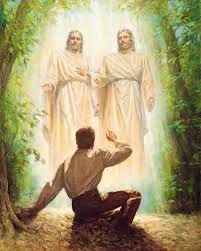
On April 3, 1836, that which was "spoken of by the mouth of Malachi—testifying that he [Elijah] should be sent" was fulfilled (D&C 110:14; see also Malachi 4:5-6). We often teach that the purpose of Elijah's return was to turn "the hearts of the fathers to the children, and the children to the fathers" (D&C 110:15). And so it was! But do we understand what we teach? God is our Father, and it is the turning of His heart to His children that was supremely demonstrated on that day, for what was revealed by the hand of Elijah was the "HOLY PRIESTHOOD" (D&C 2:1)!!! Because they are His children and His promises, it is the Father, Holy Priesthood, who plants in the hearts of the children the promises made to their fathers (see JS-History 1:36-39).
With this focus on the work of the Father and what He will do for His children (HIS FAMILY) in the last days, consider all that the Savior personally taught to the Nephites as recorded in 3 Nephi 21:
And verily I say unto you, I give unto you a sign, that ye may know the time when these things shall be about to take place--that I shall gather in, from their long dispersion, my people, O house of Israel, and shall establish again among them my Zion;
And behold, this is the thing which I will give unto you for a sign--for verily I say unto you that when these things which I declare unto you, and which I shall declare unto you hereafter of myself, and by the power of the Holy Ghost which shall be given unto you of the Father, shall be made known unto the Gentiles that they may know concerning this people who are a remnant of the house of Jacob, and concerning this my people who shall be scattered by them;
Verily, verily, I say unto you, when these things shall be made known unto them of the Father, and shall come forth of the Father, from them unto you;For it is wisdom in the Father that they should be established in this land, and be set up as a free people by the power of the Father, that these things might come forth from them unto a remnant of your seed, that the covenant of the Father may be fulfilled which he hath covenanted with his people, O house of Israel;
Therefore, when these works and the works which shall be wrought among you hereafter shall come forth from the Gentiles, unto your seed which shall dwindle in unbelief because of iniquity;
For thus it behooveth the Father that it should come forth from the Gentiles, that he may show forth his power unto the Gentiles, for this cause that the Gentiles, if they will not harden their hearts, that they may repent and come unto me and be baptized in my name and know of the true points of my doctrine, that they may be numbered among my people, O house of Israel;
And when these things come to pass that thy seed shall begin to know these things--it shall be a sign unto them, that they may know that the work of the Father hath already commenced unto the fulfilling of the covenant which he hath made unto the people who are of the house of Israel.
And when that day shall come, it shall come to pass that kings shall shut their mouths; for that which had not been told them shall they see; and that which they had not heard shall they consider.
For in that day, for my sake shall the Father work a work, which shall be a great and a marvelous work among them; and there shall be among them those who will not believe it, although a man [Joseph Smith] shall declare it unto them.
Therefore it shall come to pass that whosoever will not believe in my words, who am Jesus Christ, which the Father shall cause him [Joseph Smith] to bring forth unto the Gentiles, and shall give unto him power that he shall bring them forth unto the Gentiles, (it shall be done even as Moses said) they shall be cut off from among my people who are of the covenant.
And my people who are a remnant of Jacob shall be among the Gentiles, yea, in the midst of them as a lion among the beasts of the forest, as a young lion among the flocks of sheep, who, if he go through both treadeth down and teareth in pieces, and none can deliver.
Their hand shall be lifted up upon their adversaries, and all their enemies shall be cut off.
Yea, wo be unto the Gentiles except they repent; for it shall come to pass in that day, saith the Father, that I will cut off thy horses out of the midst of thee, and I will destroy thy chariots;
...
For it shall come to pass, saith the Father, that at that day whosoever will not repent and come unto my Beloved Son, them will I cut off from among my people, O house of Israel;
...
But if they will repent and hearken unto my words, and harden not their hearts, I will establish my church among them, and they shall come in unto the covenant and be numbered among this the remnant of Jacob, unto whom I have given this land for their inheritance;
And they shall assist my people, the remnant of Jacob, and also as many of the house of Israel as shall come, that they may build a city, which shall be called the New Jerusalem.
And then shall they assist my people that they may be gathered in, who are scattered upon all the face of the land, in unto the New Jerusalem.
And then shall the power of heaven come down among them; and I also will be in the midst.
And then shall the work of the Father commence at that day, even when this gospel shall be preached among the remnant of this people.
Verily I say unto you, at that day shall the work of the Father commence among all the dispersed of my people, yea, even the tribes which have been lost, which the Father hath led away out of Jerusalem.
Yea, the work shall commence among all the dispersed of my people, with the Father to prepare the way whereby they may come unto me, that they may call on the Father in my name.
Yea, and then shall the work commence, with the Father among all nations in preparing the way whereby his people may be gathered home to the land of their inheritance.
And they shall go out from all nations; and they shall not go out in haste, nor go by flight, for I will go before them, saith the Father, and I will be their rearward (3 Nephi 21:1-29).The greatest Elias (i.e., one who prepares the way) this world shall ever know is God, our Father, who, in turning His heart to us, his children, hath prepared a way that we may be gathered home to live with Him! Although Elijah restored a work, it is our Father's work! Great are the words of Malachi, who testified of these things!
 As you read the introduction of Malachi's masterful discourse recorded in Malachi 3, keep in mind that God, the Father, is addressing Him. I'll help you remember by adding parenthetical comments to the verse:
Behold, I (Elohim) will send my messenger, and he shall prepare the way before me (Elohim), and the Lord whom ye seek shall suddenly come to his temple, even the messenger of the covenant, whom ye delight in; behold, he shall come, saith the Lord of Hosts. (3 Nephi 24:1)
 D&C 36:8, 133:1-2, and Mark 13:34-36 make it sufficiently clear that Jesus Christ is the Lord who shall suddenly come to His temple to "fulfil the covenant which the Father hath made unto all the people of the house of Israel" (3 Nephi 16:5).
So . . . who is the messenger, apart from Jesus Christ, sent by the Father to prepare the way before Him, the Father? In context with with the rest of his writings, Malachi specifically identified him as the Levite high priest who ministers before the Lord, "for he is the messenger of the Lord of hosts" (Malachi 2:7).
But there is more to identifying this Levite messenger than meets the eye. Concerning him, Malachi further wrote:
And ye shall know that I have sent this commandment unto you, that my covenant might be with Levi, saith the Lord of hosts.
My covenant was with him of life and peace; and I gave them to him for the fear wherewith he feared me, and was afraid before my name.
The law of truth was in his mouth, and iniquity was not found in his lips: he walked with me in peace and equity, and did turn many away from iniquity.
For the priest’s lips should keep knowledge, and they should seek the law at his mouth: for he is the messenger of the Lord of hosts. (Malachi 2:4-7)
 As the children of Israel set up camp in the plains of Moab situated east of the Jordan anticipating their entrance into the promised land (see Joshua 3:1), a most unfortunate scene unfolded. And even more unfortunate for you and me is the fact that "all these things happened unto them for ensamples; and they were written for our admonition also, and for an admonition for those upon whom the end of the world shall come." (JST 1 Corinthians 10:11). According to Strong's Lexicon, the Greek for "ensamples" is "too'-pos." It means "style or resemblance; specially a sampler ("type"), i.e. a model (for imitation) or instance (for warning)." In other words, the scene that unfolded was but a foreshadowing of, and a warning to, Israel of the latter days, a day when they would symbolically camp east of Jordan in preparation for entering a land of promise. Therefore, recounting the details of that Old Testament event is worthwhile and necessary to develop an understanding of the latter-day Levite Priest referred to by Malachi and to show how these events pertain to us.
 As the children of Israel worked their way towards the promised land, they were commanded of the Lord to destroy all of the stranger in the land (see Exodus 23:27-33). This they did and became feared by all into whose land they came. However, Israel was specifically proscribed from going to war with the Moabites (Deuteronomy 2:9), inasmuch as their land was given to Lot and his posterity as a possession. Nevertheless, the Moabites, apparently unaware of this prohibition upon Israel, became "sore afraid" as the multitude of Israel defeated the Amorites and afterwards pitched their tents in the plains of Moab near Jericho (Numbers 22:2-3).
As a preemptive strike against what he thought would be an inevitable invasion, Balak, the king of Moab, sought out the help of a self-proclaimed soothsayer and so-called "prophet" in Israel, named Balaam. What Balak sought for was uncommon, to say the least, and, to my knowledge, had not, theretofore, been sought for by any king. What he desired was for Balaam to place a curse upon Israel. This is the kind of chichanery one might expect to find in Harry Potter or Lord of the Rings; but hardly the kind of pre-emptive strike we would expect in Old Testament times.
The account of the interaction between Balak and Balaam spans several chapters and depicts an episode wherein Balaam diabolically vacillated between cursing and blessing Israel. In the end, the Old Testament record makes it appear as if Balaam blessed Israel, that Balaam and Balak parted ways (see Numbers 24), and that nothing ever came of the many agitating conversations that transpired between the two. But the devil is in the details of this story, details that were apparently left out of the Old Testament account. Fortunately, several New Testament references to Balaam fill in the missing details and reveal that, notwithstanding the outward blessing be pronounced on Israel, Balaam sold out to the enemy. The apostle Peter and Jude both refer to him as a model prisoner of perdition. Describing such individuals, Peter wrote--
Spots they are and blemishes, sporting themselves with their own deceivings while they feast with you;
Having eyes full of adultery, and that cannot cease from sin; beguiling unstable souls: an heart they have exercised with covetous practices; cursed children:
Which have forsaken the right way, and are gone astray, following the way of Balaam the son of Bosor, who loved the wages of unrighteousness;
Jude likewise included Balaam in his list of individuals who become sons of perdition:But was rebuked for his iniquity: the dumb ass speaking with man’s voice forbad the madness of the prophet (2 Peter 2:13-16).
Woe unto them! for they have gone in the way of Cain, and ran greedily after the error of Balaam for reward, and perished in the gain saying of Core.
These are spots in your feasts of charity, when they feast with you, feeding themselves without fear: clouds they are without water, carried about of winds; trees whose fruit withereth, without fruit, twice dead, plucked up by the roots;
Raging waves of the sea, foaming out their own shame; wandering stars, to whom is reserved the blackness of darkness for ever (Jude 1:11-13).
Finally, the specific details of Balaam's crime was revealed by John . . . that he "taught Balac to cast a stumblingblock before the children of Israel, to eat things sacrificed unto idols, and to commit fornication" (Revelation 2:14, compare 1 Corinthians 10:18-20). For a traitor's wage, Balaam informed Balak that the nation who could not be smitten with the sword, could be smitten with scandalous women. What Balaam refused to do by enchantments, Balak was educated to do by seduction; that is, by inviting sin into Israel, he would set God against his people and turn Him to be their enemy. As wisely noted, by a not so wise man, strong men have been slain and wounded by the merchandise of a call girl! (Proverbs 7:26; compare Revelation 18:3-16).
In his scheming, Balak was overwhelmingly successful. So many of the men of Israel were guilty of adultery with the daughter of Moah, that the sin became a national offense, and for it God was wroth with the whole congregation. The gruesome curriculum of what happened is recorded in Numbers 25. As you read through these events that follow, it is important to keep fresh in your mind that these things happened unto them for ensamples, but they have been written to admonish us upon whom the end of the world has come. (JST 1 Corinthians 10:11):
Now, lest any think that latter-day Israel falls short of committing adultery and fornication on a wholesale basis, as they did anciently, think again! I remind all, that read this blog, that Jesus Christ is our husband (Isaiah 54:5), that going after other gods is adultery and fornication (see Revelation 18:3-5), and that "every man walk[ing] in his own way, and after the image of his own god, whose image is in the likeness of the world, and whose substance is that of an idol" (see D&C 1:15-16) is certainly a description of committing adultery on a wholesale basis. Are we not Israel who stand at the precipice of entering the promised land?
And who is latter-day Phinehas who saves us from the plague of sin? Who is the messenger of the Lord—the Levite High Priest—that made an atonement for the children of Israel?
And Israel abode in Shittim, and the people began to commit whoredom with the daughters of Moab.
And they called the people unto the sacrifices of their gods: and the people did eat, and bowed down to their gods.
And Israel joined himself unto Baal-peor: and the anger of the Lord was kindled against Israel.
And the Lord said unto Moses, Take all the heads of the people, and hang them up before the Lord against the sun, that the fierce anger of the Lord may be turned away from Israel.
And Moses said unto the judges of Israel, Slay ye every one his men that were joined unto Baal-peor.
And, behold, one of the children of Israel came and brought unto his brethren a Midianitish woman in the sight of Moses, and in the sight of all the congregation of the children of Israel, who were weeping before the door of the tabernacle of the congregation.

And when Phinehas, the son of Eleazar, the son of Aaron the priest, saw it, he rose up from among the congregation, and took a javelin in his hand;
And he went after the man of Israel into the tent, and thrust both of them through, the man of Israel, and the woman through her belly. So the plague was stayed from the children of Israel.
And those that died in the plague were twenty and four thousand. And the Lord spake unto Moses, saying,
Phinehas, the son of Eleazar, the son of Aaron the priest, hath turned my wrath away from the children of Israel, while he was zealous for my sake among them, that I consumed not the children of Israel in my jealousy.
Wherefore say, Behold, I give unto him my covenant of peace:
And he shall have it, and his seed after him, even the covenant of an everlasting priesthood; because he was zealous for his God, and made an atonement for the children of Israel. (Numbers 25:1-15)Phinehas! Phinehas! He is the messenger of the Lord. To him was given the covenant of life and peace, even the covenant of an everlasting priesthood, because he was zealous for his God, and made an atonement for the children of Israel!
Now, lest any think that latter-day Israel falls short of committing adultery and fornication on a wholesale basis, as they did anciently, think again! I remind all, that read this blog, that Jesus Christ is our husband (Isaiah 54:5), that going after other gods is adultery and fornication (see Revelation 18:3-5), and that "every man walk[ing] in his own way, and after the image of his own god, whose image is in the likeness of the world, and whose substance is that of an idol" (see D&C 1:15-16) is certainly a description of committing adultery on a wholesale basis. Are we not Israel who stand at the precipice of entering the promised land?
And who is latter-day Phinehas who saves us from the plague of sin? Who is the messenger of the Lord—the Levite High Priest—that made an atonement for the children of Israel?
Which John I have sent unto you, my servants, Joseph Smith, Jun., and Oliver Cowdery, to ordain you unto the first priesthood which you have received, that you might be called and ordained even as Aaron. (D&C 27:8)
Therefore, as I said concerning the sons of Moses—for the sons of Moses and also the sons of Aaron shall offer an acceptable offering and sacrifice in the house of the Lord, which house shall be built unto the Lord in this generation, upon the consecrated spot as I have appointed—
And the sons of Moses and of Aaron shall be filled with the glory of the Lord, upon Mount Zion in the Lord’s house, whose sons are ye . . .. (D&C 84:31-32)Who is is the Levite High Priest? Who turned many away from iniquity and, thereby, turned God's wrath away from the children of Israel? Who walked with God in peace and equity and was given the covenant of life and peace for the fear wherewith he feared God? In whose mouth was the law of truth found?
For they have strayed from mine ordinances, and have broken mine everlasting covenant;
They seek not the Lord to establish his righteousness, but every man walketh in his own way, and after the image of his own god, whose image is in the likeness of the world, and whose substance is that of an idol, which waxeth old and shall perish in Babylon, even Babylon the great, which shall fall.
Wherefore, I the Lord, knowing the calamity which should come upon the inhabitants of the earth, called upon my servant Joseph Smith, Jun., and spake unto him from heaven, and gave him commandments. (D&C 1:15-17)

The Messenger of God, the Father, who prepares the way before Him and for Jesus Christ, who appears suddenly to His temple, is none other than the latter-day, Levite and High Priest, Joseph Smith! In this mouth was the law found! It was him that turned many away from iniquity and, for this, to him was given the covenant of life and peace--even the covenant of an everlasting priesthood!
And so all Israel shall be saved: as it is written, There shall come out of Sion the Deliverer, and shall turn away ungodliness from Jacob:
For this is my covenant unto them, when I shall take away their sins. (Romans 11:26-27).
In the name of Jesus Christ, I bear solemn witness of these things. Amen.
To be continued . . . .
To be continued . . . .


.png)
.png)